
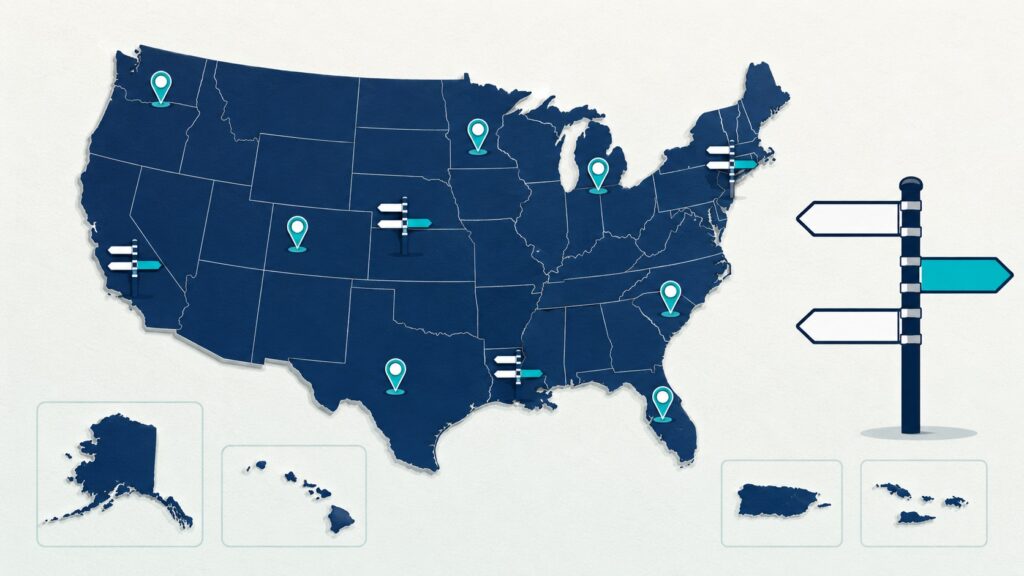
Unemployment benefits are administered by individual states, not through one nationwide application system. Each state has its own eligibility rules, filing process, deadlines, weekly certification requirements, and definition of what counts as actively looking for work.
Select the state where you worked to find its unemployment program, filing website, and contact information.
If you worked in more than one state, worked remotely for an employer in another state, or recently moved, it may not be obvious where you should file. Start with the state where your wages were reported. If you are unsure, contact that state’s unemployment agency before submitting multiple claims.
Apply as soon as possible after your employment ends. Some states impose a waiting week or will not pay benefits for weeks before your claim was opened.
Find Your State
Select your state from below to access your state’s resource information.
Before You Apply
Have the following information ready when possible:
- Your Social Security number
- Your mailing and residential addresses
- Your employment history, including employer names, addresses, and dates worked
- Your last day worked and the reason your employment ended
- Information from any separation notice or layoff letter
- Wage or earnings information requested by the state
- Your bank information if you want direct deposit
- Your alien registration or work-authorization information, if applicable
- Your DD-214 if you recently left military service
- Your SF-8 or SF-50 if you recently worked for the federal government
The exact requirements vary by state. Follow the instructions provided by the state unemployment agency.
After You Apply
Submitting the initial application usually is not the end of the process. Depending on your state, you may also need to:
- File weekly or biweekly benefit certifications
- Report any work and gross earnings
- Complete required work-search activities
- Register with the state workforce system
- Respond to requests for identity verification or additional information
- Attend a reemployment appointment
- Review and appeal an incorrect determination before the deadline
Save copies or screenshots of your application, confirmation number, weekly certifications, correspondence, and anything you submit. Government websites are not magically immune to glitches.
If your claim is denied, read the entire determination notice. It should explain why the claim was denied, how to appeal, and the deadline for filing that appeal.
Unemployment benefits are not automatic, and eligibility depends on state law and the facts of your claim. This page provides links to government resources but does not determine whether you qualify.
Last reviewed: August 2026